

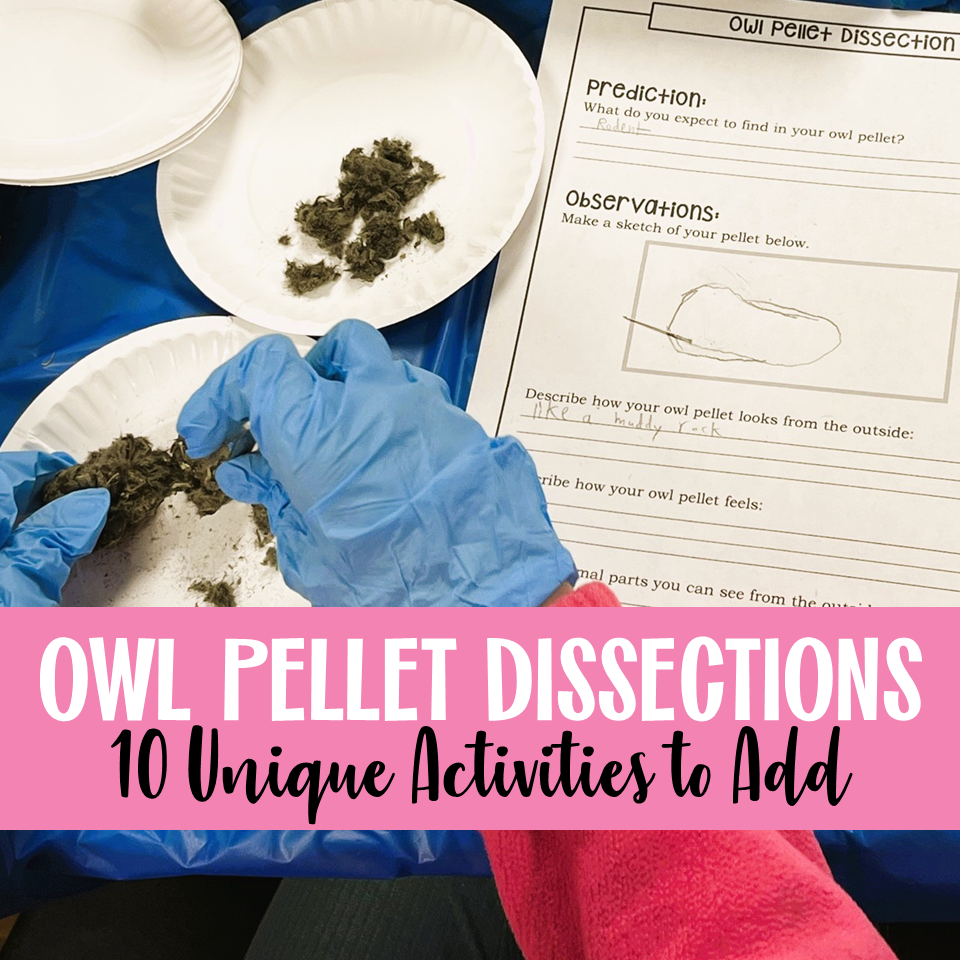
Owl Pellet Dissections – 10 Unique Activities to Add

As a former high school biology teacher and current homeschool mom, I have done my fair share of owl pellet dissections. How fascinating to peek into the habits and life of a creature that is often only glimpsed as a shadow passing in the dead of the night. Students have not always shared my fascination. I have seen students recoil in absolute horror at the sight of a half-digested rodent skeleton. I have also seen others pore over their pellets with rapt attention, identifying each tiny bone with precision and asking…. “May I please do another one?!”
What I love about owl pellet dissections is the way they bring the food chain to life. By studying owl pellets, students can learn about different animals living in an owl’s ecosystem and how they are interconnected. For example, they can see the impact predators have on the prey population and the role that each animal plays in the food chain.
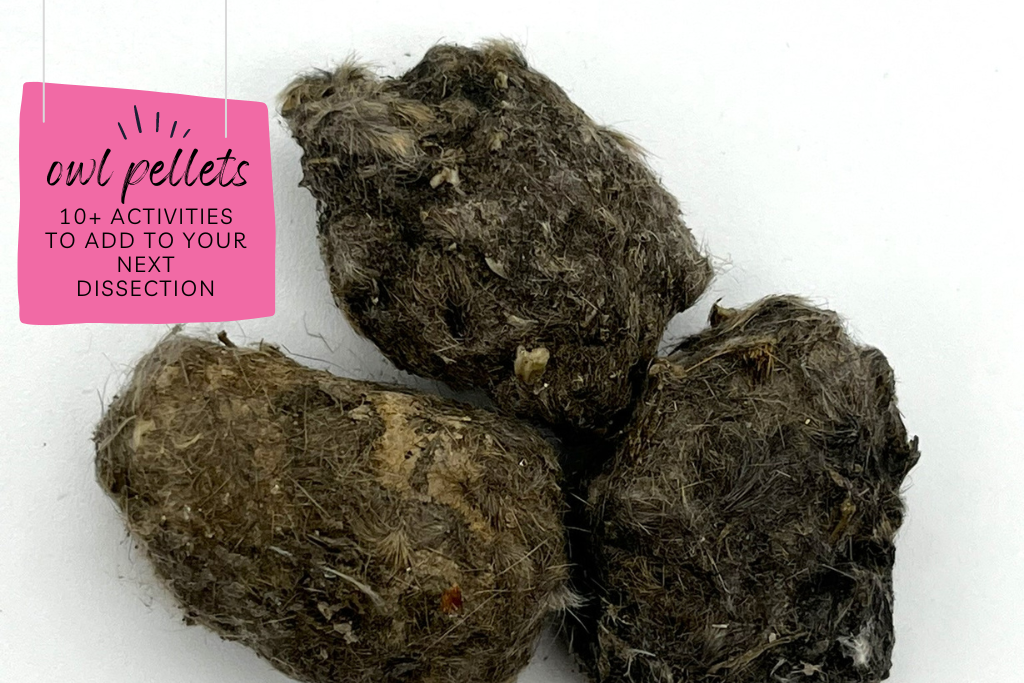
why an Owl Pellet Dissection?
Owl pellet dissections are more than just a lesson in biology. They are also an opportunity for learners to develop critical thinking and problem-solving skills. Identifying the different bones and piecing together the remains of the prey requires attention to detail and careful observation.
For students that may not be interested in the traditional lecture-based approach to learning, owl pellet dissections offer a fun and engaging alternative. They offer a hands-on experience that is both fun and educational. Additionally, this activity can also be adapted to fit different age groups and learning styles. It is suitable for traditional classrooms, homeschool co-ops, afterschool programs, scouts, or home study.
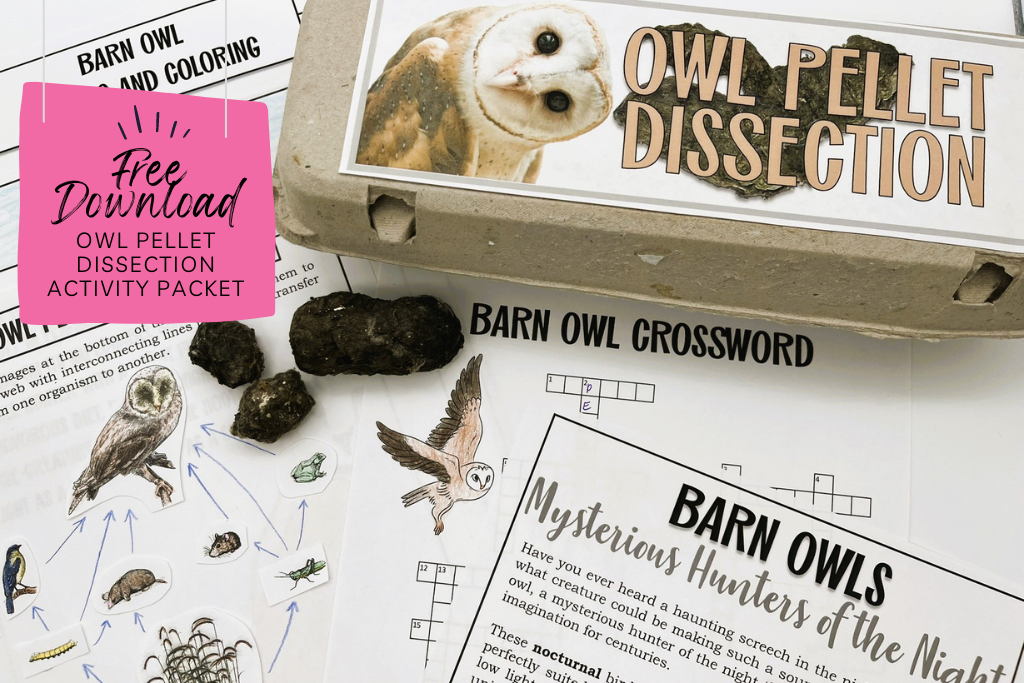
I have a great collection of engaging and unique activities that you can use to enhance your study of barn owls and owl pellets. These ready-to-print, no prep activities will make your dissection of owl pellets as fun and easy as possible! You can grab all of these resources for free!
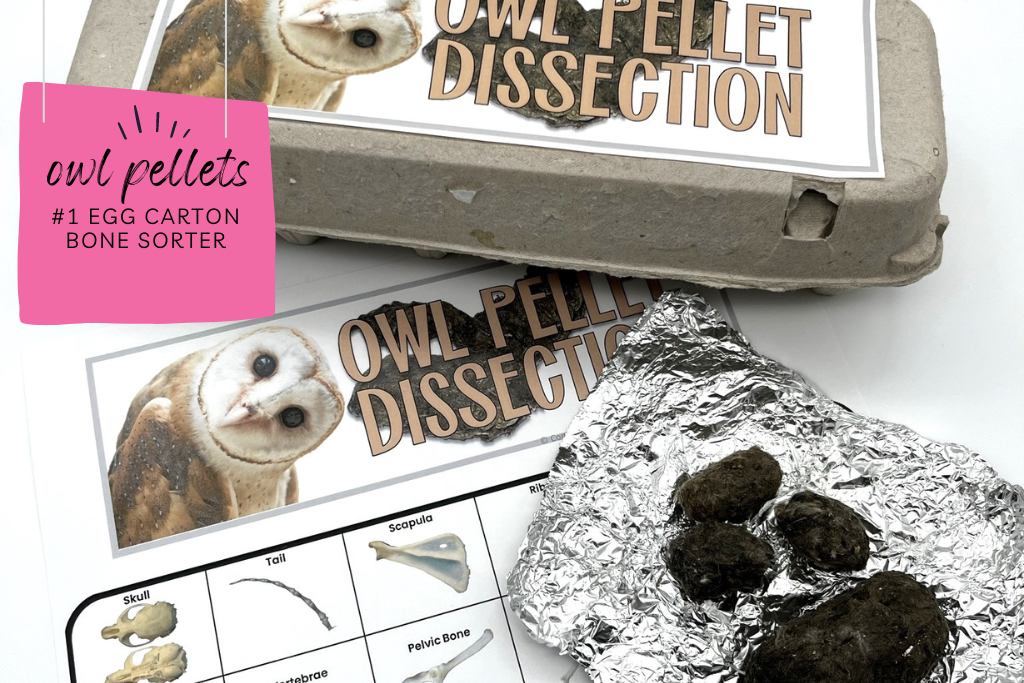
1. Egg Carton Bone Sorter
I created this adorable bone sorting container so students would have an easy place to sort and store the bones they found in their owl pellets. Simply attach the included bone identification chart inside the lid of the egg carton. Then, students can place the bones found in the pellet in the appropriate slots in the egg carton. The images on the chart will help the students identify which bones they found. Later, they can use the dichotomous key to identify the animals that fell victim to the owl. All you need to assemble the bone sorter are the images found here, scissors, and glue dots or white glue.
2. Barn Owl Slide Show Presentation
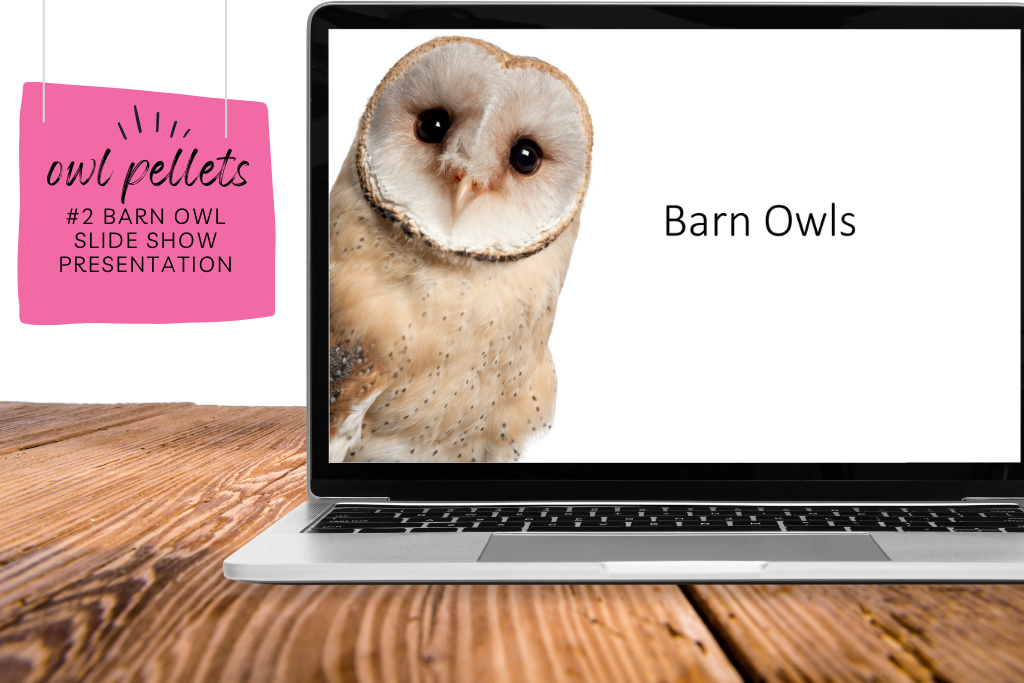
Start your owl pellet unit with this slide show about barn owls. It is an excellent way to engage students and provide them with a deeper understanding of owls. This slideshow covers the distribution of owls, their habitat, life cycle, adaptations, and the unique digestive process that produces owl pellets. The images in this slide show are from high-quality professional photo stock images and provides an engaging informative visual aid.
3. Barn Owl Reading Passage
After using the owl pellet slide show, students can read this barn owl reading passage is a great way to reinforce the information covered in the barn owl slide show. The reading passage is designed to follow along with the slide show and covers the same topics. Choose to use the traditional reading passage or one with key terms in bold, which are featured as the answers to the crossword puzzle clues.
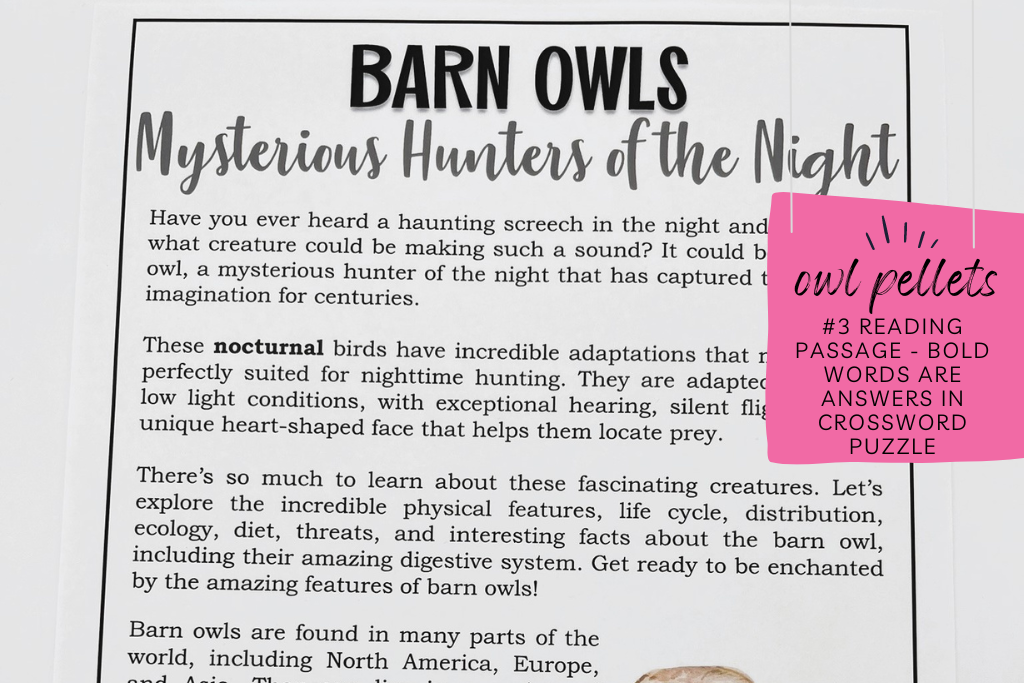
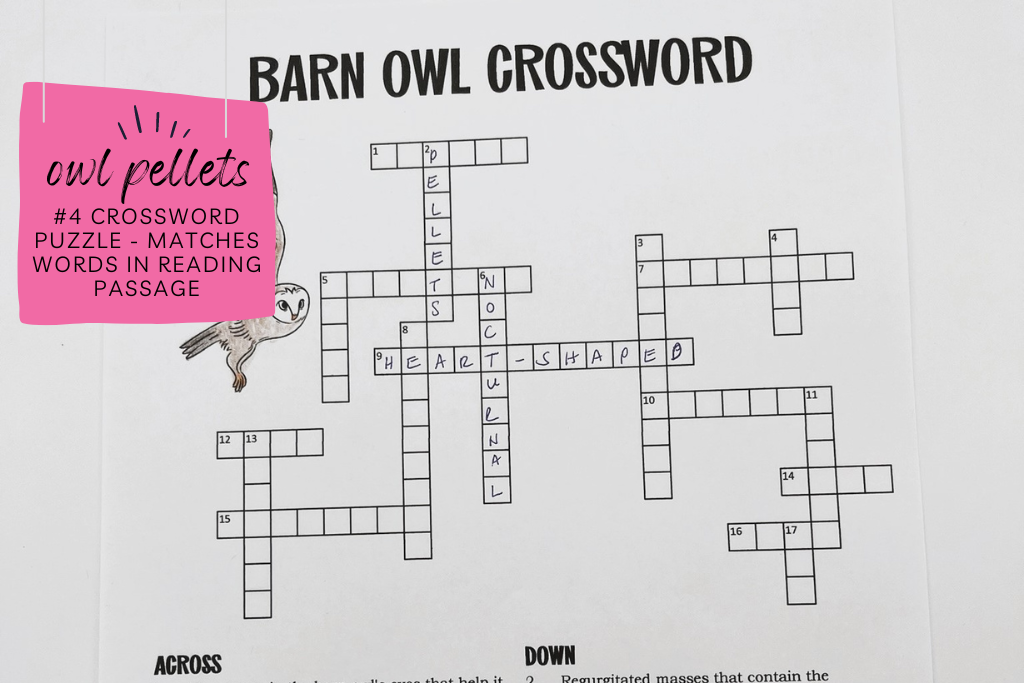
4. Barn Owl Crossword Puzzle
When students are finished reading the Barn Owl Reading passage, they can use their knowledge to complete this crossword puzzle. The barn owl reading passage includes a crossword puzzle using the key terms from the reading passage. This is a great way to reinforce key terms and can be used for extra practice, homework, or assessment.
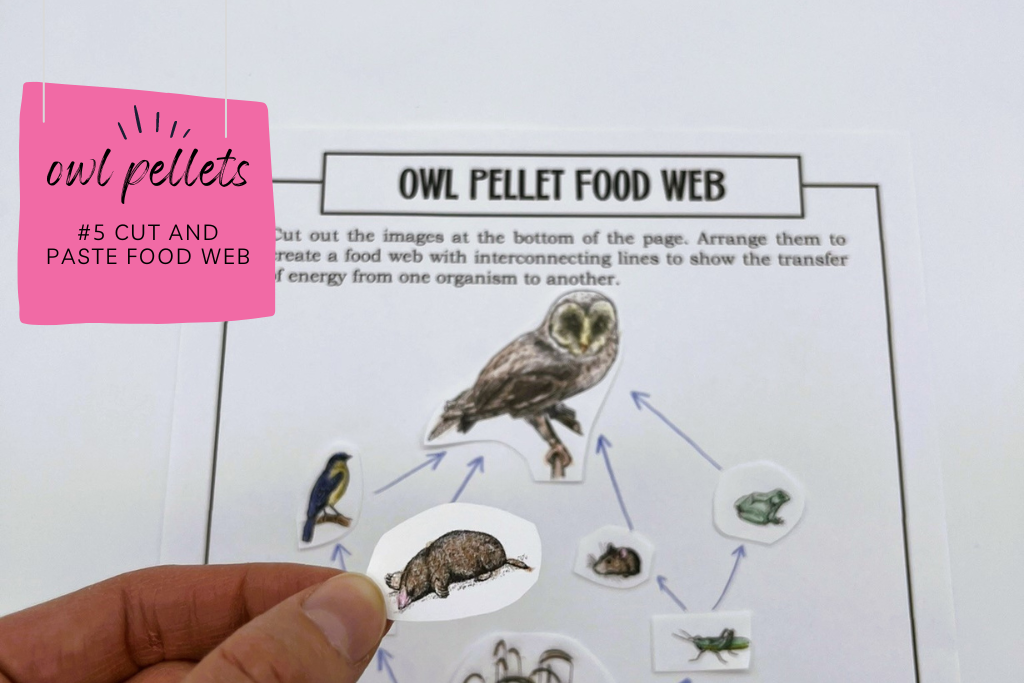
5. Cut-and-Paste Food Web
This cut-and-paste food web is an excellent way to teach students about the transfer of energy in a barn owl’s habitat. Students can use printed images to create a food web showing the transfer of energy from one organism to another. Simply cut images apart, color (if desired), and glue them in the space provided. Then students can draw arrows showing the transfer of energy from one organism to another. This activity helps students understand the role of owls in the ecosystem.
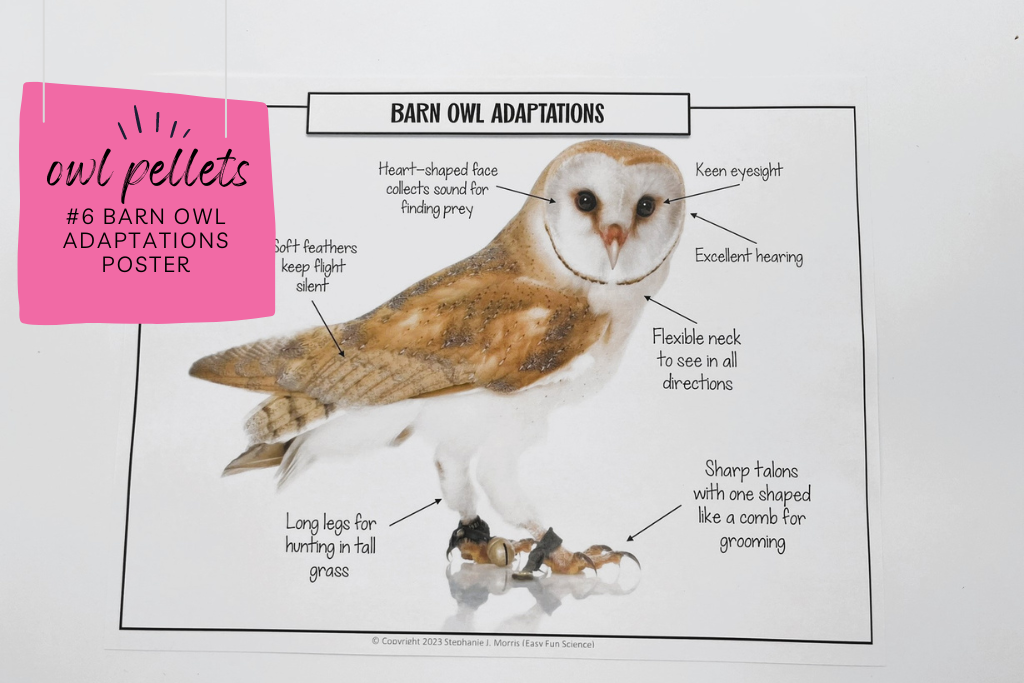
6. Barn Owl Adaptations Poster
This beautiful poster displays an image of an barn owl with descriptions of its adaptations. This poster is a great addition to any owl pellet unit. It can serve as a reference for students throughout the unit. Use it to teach students about the unique features that barn owls are equipped. This poster is also featured in the Barn Owl Slide Show.
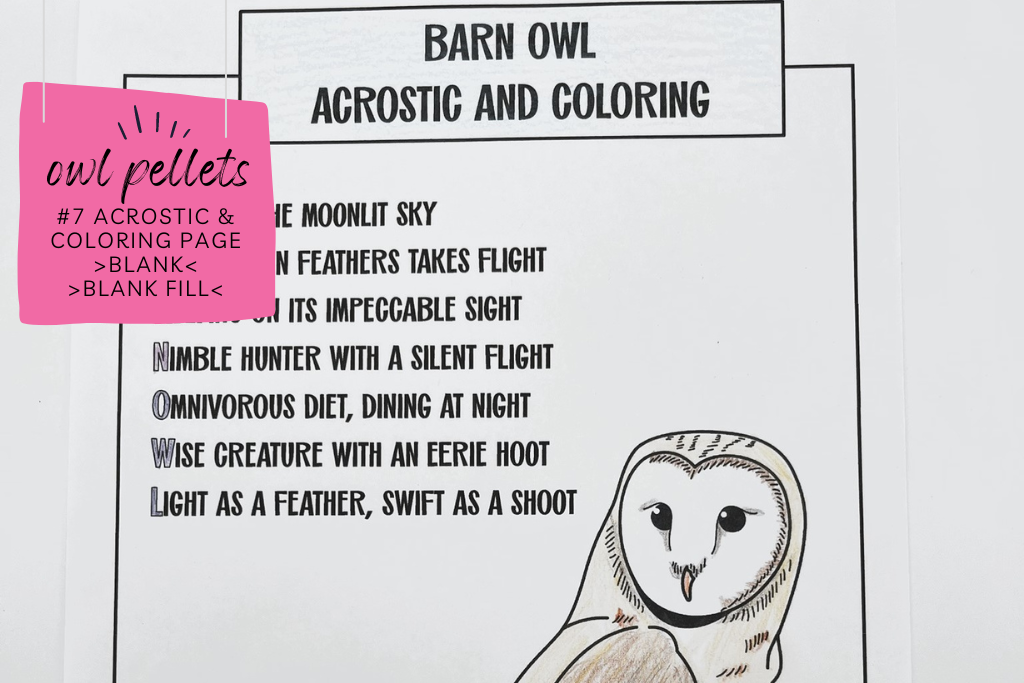
7. Owl Pellet Acrostic and Coloring Page
Add some Language Arts cross-curricular activities to your owl pellet dissection unit. This owl pellet acrostic and coloring page are creative ways for students to show their understanding of barn owls. You can use the pre-written acrostic or the blank acrostic for students to create their own poem.
8. Rat Skeleton Diagram
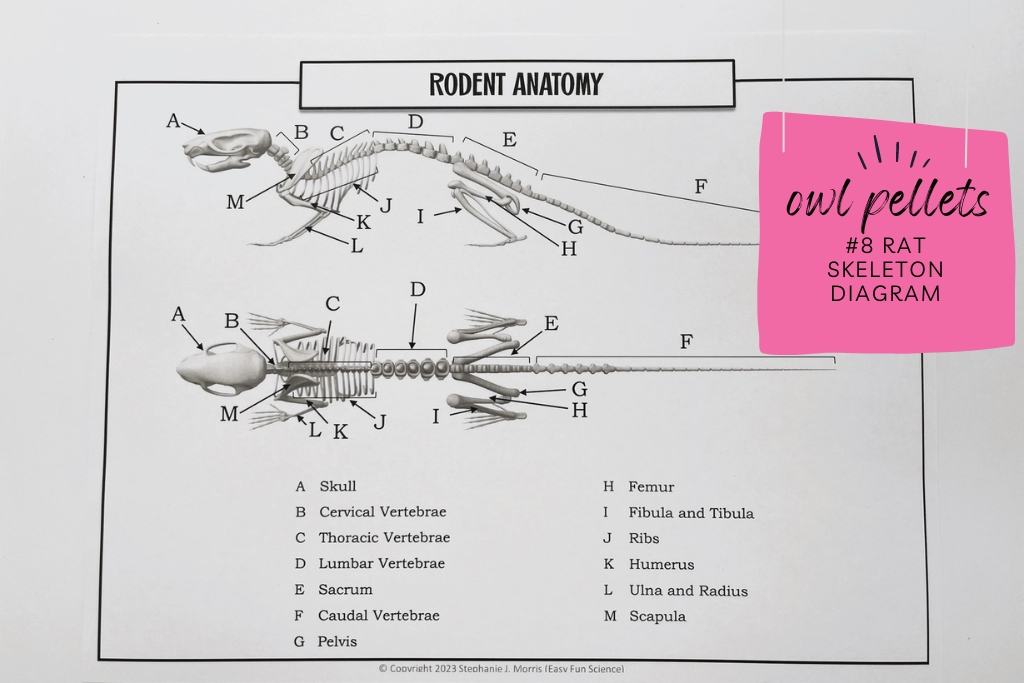
Most of the critters that your students will find in their owl pellets will be rodents. This rat skeleton diagram shows two perspectives: top view and side view. Students can use the labeled image to reconstruct a rodent skeleton from their owl pellet bones, or they can use the diagram to identify the bones. An unlabeled diagram is also included as an extra activity or assessment.
9.Creative Writing Prompts
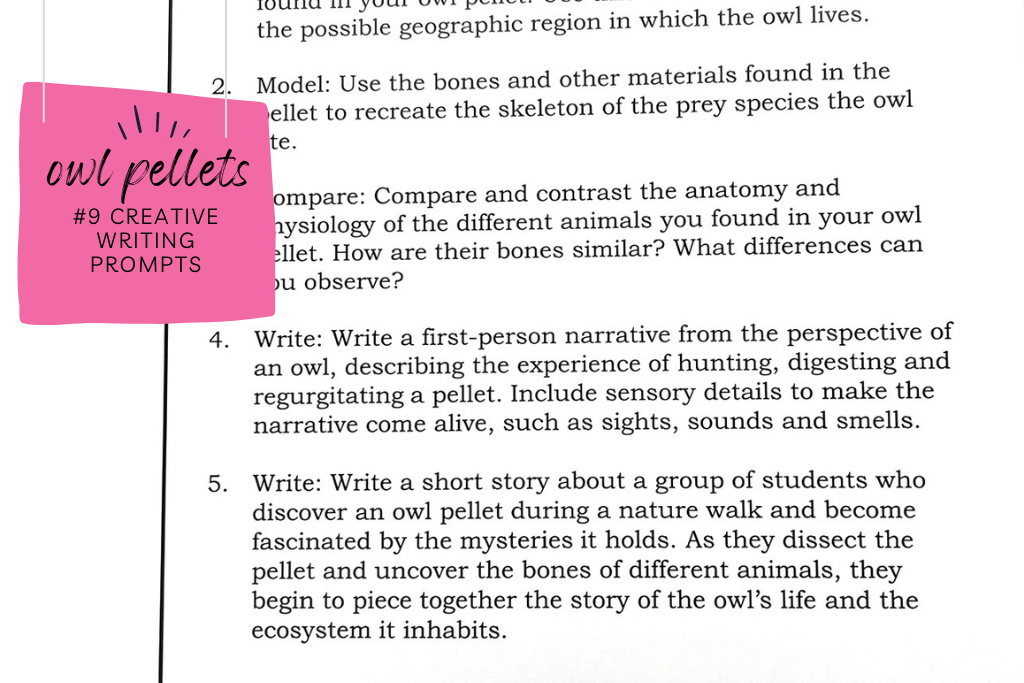
I’ve included even more ways to infuse Language Arts in your student of Barn Owls and Owl Pellets. In the “Extend the Learning” section of the Owl Pellet Dissection, you will find several writing prompts, including a first-person narrative from the perspective of an owl and a short story about a group fo kids that discover an owl pellet during a nature walk. These activities help students get creative and use their imagination to apply what they have learned. Creative writing also helps students develop their language and communication skills.
10. Dichotomous Key
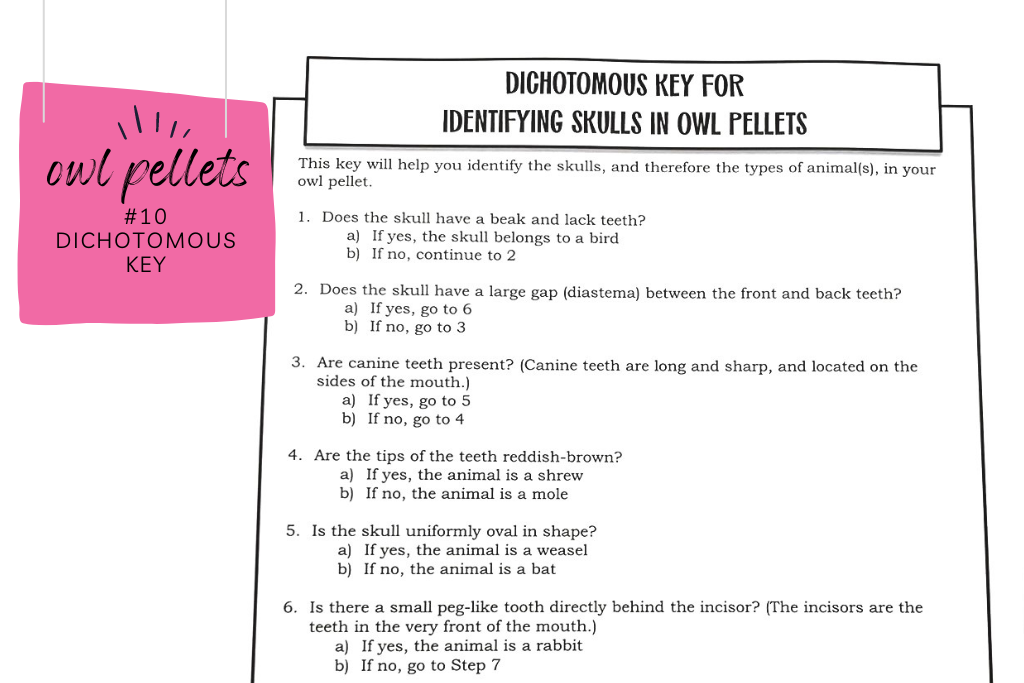
Students can use this simple dichotomous key to identify the skull they found in the owl pellet. This is a great way to introduce taxonomy and how to identify organisms, a skill that students will use in the future as they learn to identify trees, insects, birds, flowers, and more.
The dichotomous key is also an excellent activity for students to practice critical thinking and problem-solving skills. It also reinforces the importance of paying attention to detail and observation skills.
Owl pellet dissections are an exciting and educational activity that provides a unique opportunity for students to learn about food chains, ecosystems, and the anatomy of animals. You will have so many options to use in your owl pellet dissection. All of these activities are carefully organized and created to save you TIME and MONEY! Download this free Owl Pellet Dissection Activity Packet today!
Check out these websites for additional information related to barn owls:
The Owl Pages is a website dedicated to all things owl-related, including information on different owl species, their habitats, and their behavior.
The Cornell Lab of Ornithology is an organization focused on bird conservation and research, with resources on owl biology and behavior. Their gorgeous website is full of fascinating information about birds. You will find live webcams of birds in their natural habitat, information on bird identification, and links to courses like birdwatching.
The National Wildlife Federation is a nonprofit organization dedicated to protecting wildlife and their habitats. You will find hundreds of educational resources on nearly every type of bird.
Another beautiful website to visit is the British Trust for Ornithology. This UK-based organization conducts research on birds and their habitats. Their BirdFacts resource provides key information about the UK’s birds.
The American Museum of Natural History is a renowned museum featuring exhibits on the natural world, including an interactive exhibit on owl pellets and their role in the ecosystem.
Read some great books on Barn Owls and Owl Pellets
- “Owls” by Gail Gibbons is a beautifully illustrated book that provides an in-depth look at the life cycle, habitat, and behavior of different owl species, including barn owls.
- “Owl Puke: Book and Owl Pellet” by Jane Jammerslough is an interactive book and includes an owl pellet that readers can dissect, along with information on the food chain and the anatomy of different animals.
- “Owl Moon” by Jane Yolen is a beautiful picture book that tells the story of a young girl and her father as they search for a barn owl on a cold winter night.
where can you purchase the actual pellets?
Hi Carrie! I recently purchased owl pellets from Amazon. Here is the link to the store I used. They were excellent quality and had multiple skeletons inside of each pellet. Good luck!